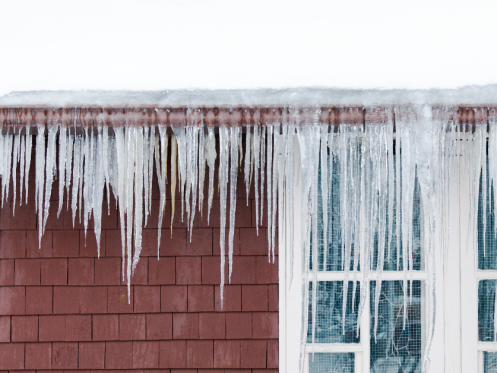
If your home was built before the 1990s, your roof is fighting a winter battle it was never designed for. Ice dams — those thick ridges of ice that form along your roofline — are causing more damage to older homes than ever before. The reason is straightforward: aging insulation, outdated ventilation systems, and shifting weather patterns are working against roofing systems that were built under completely different standards.
Here is what you need to know to protect your home before a small winter nuisance turns into a costly repair.
How Ice Dams Actually Form on Your Roof
An ice dam starts when heat from inside your home escapes into the attic and warms the roof deck. That warmth melts snow sitting on the upper sections of the roof. The melted water flows downhill toward the eaves — the edges that extend past your exterior walls. Because the eaves stay cold (they are not directly above heated living space), that water refreezes into a growing wall of ice.
Once a dam forms, additional meltwater pools behind it with nowhere to go. That standing water works its way underneath shingles and into your roof deck, insulation, ceilings, and walls.
Why Older Roofing Systems Are More Vulnerable
Homes built in the 1960s, 1970s, and 1980s were often constructed with attic insulation rated between R-11 and R-19. Current building codes for cold and mixed climates require R-49 to R-60 — three to five times higher than what many older homes have.
That gap matters. Lower insulation means more indoor heat leaks into the attic, warming the roof and triggering the melt-freeze cycle that creates ice dams. Many older homes also lack a continuous air barrier at the ceiling line, allowing warm air to escape through gaps around light fixtures, plumbing stacks, attic hatches, and wiring penetrations.
On top of that, older roofing systems typically were not installed with ice and water shield membrane along the eaves. Modern roofing codes require this waterproof underlayment as a second line of defense. Without it, an older roof has almost no protection once water backs up behind an ice dam.
The Ventilation Problem Most Homeowners Miss
Proper attic ventilation keeps the underside of your roof deck cold — close to the outdoor temperature. When the roof stays cold, snow does not melt unevenly and ice dams do not form.
Older homes frequently have ventilation problems that include blocked or painted-over soffit vents, no ridge venting at all (relying only on gable vents, which provide uneven airflow), insulation pushed up against the roof sheathing with no air channel, and bathroom or kitchen exhaust fans that vent directly into the attic instead of outdoors.
Any one of these issues can raise attic temperatures enough to trigger ice dam formation during a heavy snowfall.
Warning Signs You Already Have an Ice Dam Problem
Watch for these red flags during and after winter storms:
- Large icicles hanging from gutters or eaves. A few small icicles are normal. Thick clusters that grow several feet long signal trapped meltwater and poor ventilation.
- Uneven snow melt patterns. If patches of your roof are bare while your neighbors’ roofs remain snow-covered, your attic is likely leaking heat.
- Water stains on ceilings or walls. Brown spots, peeling paint, or bubbling drywall near exterior walls during winter often trace back to ice dam leaks.
- Damp or wet insulation in the attic. Moisture-damaged insulation loses its R-value, which creates a cycle — less insulation means more heat loss, which means more ice dams.
- Sagging or damaged gutters. The sheer weight of ice buildup can pull gutters away from the fascia board, causing structural damage to the roofline.
If you notice two or more of these signs, the damage may already be progressing behind your walls where you cannot see it.
What You Can Do Right Now
For immediate relief during an active winter storm, use a roof rake (a long-handled tool you operate from the ground) to pull snow off the lower three to four feet of your roof. Removing that snow eliminates the raw material that feeds ice dam growth. Never climb onto a snow-covered or icy roof — the fall risk is serious.
Avoid chipping at ice dams with a hammer, hatchet, or ice pick. That approach almost always damages shingles and flashing, creating new entry points for water. If ice is actively causing leaks inside your home, call a roofing professional who can safely remove the dam without damaging your roof.
Long-Term Fixes That Actually Prevent Ice Dams
Short-term fixes get you through the season, but the only way to stop ice dams from coming back is to address the root cause: heat escaping into your attic.
Air sealing is the single most effective step. A professional can identify and seal gaps around wiring, plumbing, recessed lights, attic hatches, and ductwork where warm air leaks into the attic space. This alone can make a dramatic difference.
Upgrading attic insulation to current recommended R-values (R-49 or higher in most cold-climate zones) reduces the heat transfer that warms your roof deck.
Improving ventilation with properly functioning soffit intake vents and ridge exhaust vents creates continuous airflow that keeps the attic cold and the roof temperature even.
When the roof itself needs replacement, a qualified roofing contractor should install ice and water shield membrane along the eaves, in valleys, and around penetrations — something that was rarely done on homes built before the mid-1990s.
When to Call a Roofing Professional
Consider scheduling a professional roof and attic evaluation if your home is 25 years or older and has never had insulation or ventilation upgrades, you see recurring icicle buildup or water stains each winter, you are planning a roof replacement and want to address the underlying heat loss issues at the same time, or you have already experienced interior water damage from ice dams.
A thorough assessment should include an inspection of your current insulation levels, ventilation setup, and roof condition — not just a quick visual check from the ground.
The Bottom Line
Ice dams are not just a cosmetic winter annoyance. On older roofs with outdated insulation and ventilation, they are a direct path to water damage, mold growth, and expensive structural repairs. The good news is that the problem is solvable. Sealing air leaks, adding insulation, and improving ventilation can eliminate ice dams entirely — and lower your heating bills in the process.
If your home was built before modern building standards caught up with winter weather demands, now is the time to get ahead of the problem before next season.
Nationwide Contracting provides professional roof inspections, repairs, and full replacements for homeowners across Indiana. Call (463) 363-1003 or schedule an appointment online to evaluate your roof before winter causes damage you cannot see.