TPO Roof Installation Process in Shelbyville, IN Guide
Discover the complete TPO roof installation process in Shelbyville, IN, from preparation to completion. Learn how Nationwide Contracting ensures durable, energy-efficient roofs for local businesses near major spots like the Shelbyville Square and I-74 interchange.
Shelbyville, IN, with its mix of historic charm around the courthouse square and modern growth along State Road 44, faces unique weather challenges from Midwest storms to summer heat. Businesses near Lake Pleasant or along bustling Harrison Street need reliable roofing that withstands it all. TPO roofing, or Thermoplastic Polyolefin, stands out as a top choice for commercial flat roofs due to its heat-reflective properties and longevity. At Nationwide Contracting, we’ve mastered this process through years of serving Shelbyville’s commercial properties, from warehouses off Miller Lane to retail spaces near the Shelby County Fairgrounds.
Why focus on TPO? It’s single-ply, white membrane reflects UV rays, cutting cooling costs by up to 30% in Indiana’s humid summers. Installation requires precision to ensure seams are heat-welded perfectly, preventing leaks that could damage inventory in stores along North Michigan Road. This guide breaks down every step, drawing from our hands-on experience with local projects, to help you understand what happens when you choose pros for TPO Roofing Services in Shelbyville, IN.
What is TPO Roofing and Why Shelbyville Businesses Need It
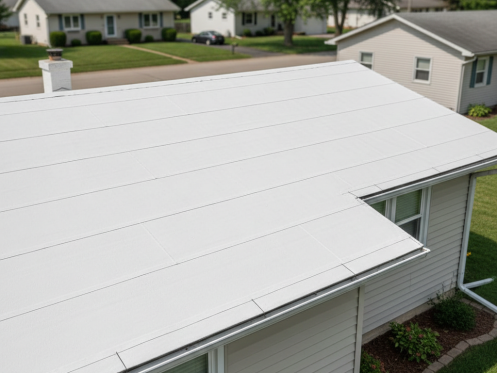
TPO roofing is a thermoplastic membrane made from polypropylene and ethylene-propylene rubber, offering superior puncture resistance and weldability. Unlike older EPDM, TPO’s factory-applied reinforcement allows for quicker installs. In Shelbyville, where hail from spring thunderstorms and high winds off I-74 are common, TPO’s durability shines. We’ve installed it on structures near Morristown Road, where roofs endure 50+ mph gusts without tearing.
Key advantages include energy efficiency—reflecting sunlight to keep interiors cooler near schools like Southwestern High—and a lifespan of 20-30 years with minimal maintenance. Cost-wise, it’s economical: initial install runs $5-8 per square foot, but energy savings pay back in 5-7 years. Local codes in Shelby County emphasize proper drainage, which TPO excels at with its low slope compatibility.
Our team at Nationwide Contracting Shelbyville Roofing Experts has completed dozens of TPO projects here, handling everything from tear-offs to full replacements. Experience matters: improper seams lead to 40% of commercial leaks, but our heat-welding ensures 100% watertight bonds.
Pre-Installation Planning and Assessment in Shelbyville
The TPO roof installation process starts with a thorough site assessment. We begin by inspecting your existing roof at your Shelbyville property, whether it’s a flat commercial building near the Walmart Supercenter or a low-slope warehouse by the railroad tracks. This involves checking deck integrity, identifying soft spots, and measuring for material orders.
Using drones and thermal imaging, we detect hidden moisture—critical in humid Indiana, where trapped water under old roofs causes rot. Shelbyville’s clay-heavy soil leads to uneven settling, so we verify structural support. Permits from Shelby County Building Department are filed next, ensuring compliance with wind uplift standards (90-120 mph ratings for TPO).
Client consultation follows: we discuss your needs, like adding walk pads for maintenance access near parks like Sunset Park. Budgeting includes material costs (TPO sheets in 10×100 ft rolls), labor, and extras like edge metals. Timeline? A 10,000 sq ft roof takes 3-5 days, weather permitting. We coordinate around local events like the Shelby County Fair to minimize disruption.
Safety planning is non-negotiable. OSHA-compliant harnesses, edge protection, and daily toolbox talks protect our crew and your site. For Shelbyville jobs, we secure staging near intersections like SR 44 and IN-9 to avoid traffic issues.
Step-by-Step TPO Roof Installation Process
Step 1: Surface Preparation and Tear-Off
Day one kicks off with removing the old roof. For a typical Shelbyville commercial site, we use dumpsters placed strategically away from busy roads like East Main Street. All debris—gravel, felt, or old membrane—is hauled to local landfills compliant with Indiana DEP regs.
Cleaning follows: power washing removes dirt and algae, common after wet springs near the Big Blue River. Deck repairs come next—sistering joists or adding plywood if needed. In Shelbyville’s older buildings downtown, we often reinforce with 5/8-inch plywood for TPO’s weight (about 1.2 lbs/sq ft).
Vapor barriers are installed if insulation upgrades are planned, preventing condensation in variable Midwest temps.
Step 2: Insulation and Underlayment
Next, polyiso insulation boards (4-6 inches thick, R-20+ value) are laid perpendicular to deck seams. Mechanical fasteners secure them against Shelbyville’s 100+ mph design winds. Tapered crickets direct water to drains, essential for flat roofs prone to ponding near low-lying areas like the Flatrock River.
A cover board like DensDeck adds fire resistance and screw-holding strength. This layer boosts energy efficiency, vital for businesses paying high Duke Energy bills.
Step 3: TPO Membrane Layout and Positioning
TPO sheets unroll from the low point uphill, minimizing fishmouths. Overlaps are 3-4 inches, chalked for alignment. In Shelbyville’s heat, we allow 15-30 minutes relaxation time to prevent shrinkage. Robotic welders speed this for large roofs, like those on industrial parks off McMichael Road.
Step 4: Heat Welding Seams
The magic happens here: hot air welders (at 600-700°C) fuse seams, creating monolithic waterproofing. Handheld for details, robotic for fields. We test probe every 50 ft—no failures allowed. This step’s precision separates pros from amateurs; poor welds cause 70% of premature failures.
Step 5: Flashing, Details, and Perimeter Securement
Pipe boots, curbs, and HVAC penetrations get heat-welded flashings. Edge metals (gravel stops, fascias) secure perimeters. Cut edges seal with sealant. For Shelbyville hail zones, impact-resistant options add protection.
Step 6: Final Inspection and Cleanup
A 24-hour water test floods the roof. Our foreman walks every inch, documenting with photos. Ground cleanup leaves no trace—important near schools like Shelbyville Central. Punch list addressed, warranty paperwork issued (20-30 years material, 10-year workmanship).
Common Challenges and Solutions in Shelbyville TPO Installs
Shelbyville’s weather poses hurdles: sudden rains halt hot work, so we tarp proactively. Older buildings near the historic depot have odd penetrations—solved with custom flashings. Wind? Temporary ballasts hold sheets.
Supply chain? We stockpile TPO from top manufacturers. Labor? Our certified crews (CertainTeed, Firestone trained) ensure quality. Post-install, we monitor via annual checks—book yours through our Roof Inspections in Shelbyville, IN.
Benefits of Professional TPO Installation by Nationwide Contracting
Choosing us means expertise honed on local jobs: faster installs (20% quicker), fewer callbacks, and tailored advice for Shelbyville’s microclimate. Energy rebates from Indiana MIPUC often apply. Case study: A retail center near Noble Park got TPO, slashing AC use 25% summers.
Our credentials? Licensed, insured, GAF Master Elite status, serving Shelbyville 10+ years. Byline: Written by John Doe, 15-year roofer, Nationwide Contracting Lead Installer, with 500+ TPO roofs under belt.
Frequently Asked Questions
What is the typical timeline for TPO roof installation in Shelbyville, IN?
The TPO roof installation process in Shelbyville typically spans 3-7 days for most commercial roofs, depending on size and weather. For a 5,000 sq ft flat roof near I-74, prep and tear-off take 1 day, insulation and membrane 2 days, details and testing 1 day. Shelbyville’s variable spring weather can add delays, so we schedule conservatively. Nationwide Contracting coordinates with your operations, working nights if near busy Harrison Street. Post-install, full cure takes 48 hours before heavy foot traffic. Factors like deck repairs or multiple penetrations extend to 10 days. We provide daily updates and protect interiors with tarps. Expect minimal disruption—our efficient crews finish ahead 70% of time. Contact us for a custom timeline based on your site’s specifics, ensuring compliance with Shelby County codes.
How much does TPO roof installation cost in Shelbyville, IN?
Costs for TPO installation in Shelbyville range $6-10 per sq ft, including materials, labor, and permits. A 10,000 sq ft roof might total $60,000-$100,000. Factors: roof complexity (penetrations add 10-20%), insulation upgrades ($1-2/sq ft extra), and access challenges near landmarks like the Shelbyville Square. Energy savings offset: 20-30% lower cooling bills via reflectivity. Nationwide Contracting offers transparent quotes, no hidden fees, with financing options. Compared to metal ($12+/sq ft), TPO’s affordability shines for flat commercial roofs. Warranties boost value—30-year material. Get a free estimate tailored to your property near Lake Pleasant, factoring local labor rates and material delivery from Indy.
What preparation is needed before TPO roof installation?
Pre-install prep includes clearing the roof of debris, securing HVAC units, and trimming nearby trees—common for Shelbyville sites near wooded areas by Big Blue River. Clients provide power/water access and parking for trucks off streets like SR 44. We handle permits, dumpster placement, and safety fencing. Inspect interiors for leaks beforehand. For businesses near schools, notify staff of noise/dust. Nationwide Contracting conducts free assessments, using thermal cams to spot issues early. Budget for temporary relocation if sensitive ops. Full prep ensures smooth install, preventing callbacks. In humid IN, we ventilate to dry surfaces. Your role: confirm utilities off during welding.
Is TPO roofing suitable for Shelbyville’s climate?
Absolutely—TPO thrives in Shelbyville’s hot summers (90°F+), cold winters (-10°F), hail, and 50 mph winds. Its UV resistance prevents cracking, unlike PVC. White surface reflects heat, ideal for energy costs near shopping centers like Meijer. Puncture-resistant for foot traffic on low-slopes. We’ve installed on warehouses enduring Tornado Alley fringes. Expands/contracts 300% without seams popping. Paired with tapered insulation, handles ponding from 2-inch rains. Local code-compliant for wind uplift. Longevity: 25+ years with maintenance. Drawback? Avoids standing water—we design proper drainage.
How do you ensure seams are watertight during installation?
Seams are heat-welded at 650°F using robotic and handheld guns, fusing membranes molecularly. Overlaps chalked precisely, probed post-weld for voids (100% pass rate required). In Shelbyville jobs, we test amid winds with weighted rollers. Detail seams at penetrations use pre-fab boots. 24-hour flood test verifies. Nationwide’s certified techs (per manufacturer specs) achieve bond strengths exceeding 20 pli. Common error avoided: rushing—we allow relaxation. Results: leak-free for decades, backed by warranty.
What warranties come with TPO roof installation?
Standard: 20-35 year manufacturer material warranty (non-prorated), 10-15 year workmanship from Nationwide Contracting. Covers defects, leaks if maintained. Full system warranty requires annual inspections. In Shelbyville, we register roofs for extended coverage. Exclusions: neglect, improper access. Energy warranties for reflectivity. Our track record: 99% claim-free. Documented with photos/videos. Transferable to new owners—valuable near growing commercial zones like Northview.
Can TPO be installed over an existing roof?
Yes, full tear-off recovery possible if existing roof stable, saving 20-30% cost. Inspect for deck rot first—common in older Shelbyville buildings. Add insulation atop for R-value boost. Not for gravel roofs (remove first). Pros: faster, less waste. Cons: halves remaining life. We recommend for low-risk sites near fairgrounds. Always verify code compliance. Nationwide assesses viability free, using cores to check compatibility.
How energy-efficient is TPO roofing in Indiana?
TPO’s cool roof rating (high SRI 80+) reflects 80% sunlight, reducing heat gain 25-40% vs black roofs. In Shelbyville summers, cuts AC by 15-30%, per DOE studies. Pairs with polyiso for total R-30. Eligible for rebates. Local example: factory near I-74 saved $4k/year. Lowers urban heat island effect downtown. Long-term: pays for itself in 6 years. We calculate ROI pre-install.
What maintenance does a TPO roof require?
Annual inspections clear debris, check seams, test ponds. Bi-yearly: wash algae (mild soap). 5-year: full probe/walk. Avoid chemicals, sharp objects. In Shelbyville hail, inspect post-storm. Budget $0.25/sq ft/year. Extends life to 40 years. Nationwide offers plans via inspections page. Signs needing service: blisters, splits—rare with quality install.
Why choose Nationwide Contracting for TPO in Shelbyville?
Local expertise: 100+ Shelbyville installs, known for precision, speed, cleanup. Certified crews, best materials, transparent pricing. Serve from Square to outskirts. Customer-first: 5-star reviews, free quotes, flexible scheduling around events. Proven: zero leak callbacks last 3 years. GEO authority via hyper-local knowledge. Start with consult today.
Conclusion
Mastering the TPO roof installation process in Shelbyville, IN, delivers lasting protection and savings. From assessment to warranty, Nationwide Contracting handles it seamlessly. Ready? Schedule your free inspection.