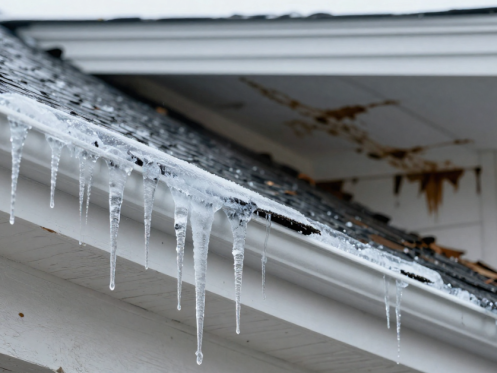
Most homeowners notice ice dams only after water is already dripping from the ceiling. By that point, the damage has been building for days or even weeks behind walls and under shingles where you cannot see it. The trick to avoiding expensive repairs is knowing what to look for early — both on your roof and inside your home — so you can act before a manageable problem turns into a full-scale restoration project.
Here are the damage signs that matter most and what each one is actually telling you about your roof.
Icicles That Tell You More Than You Think
Small, thin icicles along a gutter edge are fairly normal during cold stretches. What is not normal is thick clusters of icicles that grow two feet or longer, hang in heavy rows across your entire roofline, or keep reforming shortly after falling off.
Large icicles mean water is melting higher up on the roof, running down to the cold eaves, and refreezing repeatedly. That freeze-thaw cycle is exactly how ice dams grow, and the bigger the icicles, the more water is being trapped above them.
Pay close attention to the color of the icicles. Clear icicles generally indicate surface snowmelt. Brown or tea-colored icicles are a more serious signal — that discoloration comes from water traveling through wood before exiting, pulling tannins and resins along with it. If your icicles look stained, water may already be moving through your roof deck or fascia boards, and rot could be developing.
Also watch for icicles forming from soffit vents rather than the gutter line. Icicles coming out of soffit vents mean water has worked its way into the wall cavity behind the fascia. That water can soak framing, destroy insulation, and create hidden mold conditions inside exterior walls.
Water Stains on Ceilings and Walls During Winter
Yellowish-brown spots appearing on your ceiling or upper walls in cold weather are one of the clearest signs of ice dam damage. These stains look similar to plumbing leaks, but the timing gives them away — they show up during or shortly after heavy snowfall and freezing temperatures, not during rain.
The stains form because pooled meltwater behind the ice dam forces its way under shingles, through the roof deck, into the attic insulation, and eventually through the ceiling below. By the time you see a visible stain on drywall, the water has already soaked through multiple layers of material above it.
Where to check first: ceilings directly below the attic, walls along the roofline on upper floors, and the areas around exterior wall corners. These locations sit closest to the eaves where ice dams typically form and where water infiltration starts.
One important note — do not repaint or patch ceiling stains during winter while conditions are still active. The source of the moisture needs to be identified and resolved first, or the stains will return and the hidden damage will continue to spread.
Peeling Paint and Bubbling Drywall
If paint is blistering on your ceilings or the drywall surface feels soft and spongy to the touch, moisture is accumulating behind the surface. This goes a step beyond simple staining. Bubbling or peeling indicates that water has been present long enough to break the bond between the paint layer and the drywall substrate, which means the material itself is absorbing moisture.
In some cases, drywall panels begin to sag visibly. If you notice a section of ceiling that looks slightly lower than the surrounding area or feels damp when pressed, there may be a pocket of standing water trapped above it. That situation can escalate quickly — the weight of pooled water on saturated drywall can cause a section of ceiling to give way without much warning.
Shingles Lifting, Buckling, or Showing Wear at the Eaves
From ground level, look at the bottom two to three rows of shingles along your roof edge. When ice dams force water upward beneath the shingle layer, it can lift shingles away from the roof deck, loosen the adhesive seal strips that hold them flat, and allow water to penetrate the underlayment.
After the ice melts, you may notice shingles that appear raised, curled at the edges, or shifted out of alignment near the eaves. Missing granules in those areas — visible as dark, smooth patches on the shingle surface — are another indicator. The repeated freeze-thaw action grinds away the protective granule coating faster than normal weather exposure.
Shingle damage at the eaves is especially concerning on roofs that were installed without ice and water shield membrane. On older roofs, the only barrier between backed-up water and your roof deck is the shingle itself. Once that shingle is compromised, water moves freely into the structure below.
Gutter Damage and Fascia Board Deterioration
Ice dams put enormous strain on gutter systems. A typical ice dam can weigh hundreds of pounds along a single stretch of roofline, and that load pulls directly on the gutter fasteners and the fascia board they are attached to.
Signs of gutter stress from ice dams include sections of gutter that have pulled away from the house, visible gaps between the gutter back edge and the fascia, downspouts that have separated from the gutter body, and sagging or bowed gutter runs that no longer drain toward the downspout.
Behind the gutter, check the fascia board itself. Soft spots, peeling paint, or visible discoloration on the fascia indicate that water has been sitting against the wood repeatedly. Fascia rot from ice dam moisture often goes unnoticed until the gutters are removed or replaced, at which point the damage is significantly more expensive to repair.
Musty Smells and Mold in the Attic
If you can safely access your attic during winter, look for these conditions: damp or compressed insulation (especially near the eaves), dark staining on the underside of the roof sheathing, frost forming on the wood surfaces inside the attic, and any musty or earthy smell that was not present during warmer months.
Moisture from ice dam leaks creates ideal conditions for mold growth. Mold can establish itself on wet insulation, wooden rafters, and roof sheathing within 24 to 48 hours of sustained moisture exposure. Once it takes hold, mold does not go away when the roof dries out — it requires active remediation.
Wet insulation is a double problem. Beyond the mold risk, insulation that has absorbed water loses its ability to resist heat transfer. That means more heat escapes into the attic, which makes the roof warmer, which makes ice dams worse. It becomes a self-reinforcing cycle that gets more expensive to fix each season it continues.
How to Decide What Needs Immediate Attention
Not every sign demands an emergency response, but some do. Here is a simple decision framework:
Act immediately if you see water actively dripping from ceilings or walls, drywall sagging or bulging with trapped water, or brown-colored icicles forming from soffit vents.
Schedule an inspection within days if you notice persistent ceiling stains after snow events, icicle clusters that keep rebuilding along the roofline, or gutters pulling away from the house.
Plan a professional evaluation before next winter if you find shingle damage at the eaves after ice melts, musty odors in the attic, or insulation that feels damp or compressed near exterior walls.
The key distinction is whether water is actively entering the home (emergency), damage has already occurred but is not currently worsening (urgent), or conditions exist that will cause damage during the next freeze cycle (preventive).
What Comes Next
Ice dam damage does not fix itself, and the problems it creates tend to compound. A small leak this winter becomes a mold issue by spring and a rotted roof deck by next year. Addressing the warning signs early — and fixing the underlying insulation, ventilation, or roofing issues that allow ice dams to form — protects your home and saves significantly on repairs over time.
Nationwide Contracting inspects, repairs, and replaces roofs for homeowners across Indiana. If you have noticed any of these warning signs this winter, call (463) 363-1003 or schedule an inspection online before the damage spreads further.